

16th – 17th Century CE
The ThanjavurNayak Dynasty
A glorious chapter of art, culture and royal heritage — the dynasty that made Thanjavur a centre of music, dance, literature and painting.
At a Glance
The Thanjavur Nayaks
Introduction
Discover the dynasty that transformed Thanjavur into a distinguished centre of classical music, dance, literature, painting and architectural splendour. The Thanjavur Nayak Dynasty, also known as the Nayaks of Thanjavur or the Tanjore Nayaks, occupies a remarkable place in the history of South India. Ruling the fertile Kaveri River delta from the sixteenth to the seventeenth century, this Telugu-speaking royal dynasty played a significant role in shaping the region’s cultural and artistic identity. Initially appointed as provincial governors under the mighty Vijayanagara Empire, the Nayaks gradually established themselves as independent rulers, making Thanjavur the heart of a flourishing regional kingdom. Their reign ushered in a vibrant period of artistic expression, intellectual achievement, temple patronage and royal refinement. Although their political rule eventually gave way to the Maratha dynasty, the Nayaks left behind an enduring cultural legacy that continues to define Thanjavur’s identity.
At a Glance – The Thanjavur Nayaks
Cultural Music, dance, literature, painting and temple Contributions architecture Successors Maratha rulers of Thanjavur
Who Were the Thanjavur Nayaks?
The Thanjavur Nayaks were a distinguished dynasty of Telugu- speaking rulers who governed the fertile Kaveri delta during the centuries following the great Chola era. The title Nayaka, meaning leader or commander, was traditionally associated with military chiefs entrusted with the administration of territories under the Vijayanagara emperors. The Nayak rulers of Thanjavur initially served in this capacity, administering the region, collecting revenue and maintaining military forces on behalf of the empire. As the influence of the Vijayanagara Empire gradually weakened, the Thanjavur Nayaks consolidated their authority and emerged as powerful regional sovereigns. Their kingdom flourished in one of South India’s most prosperous agricultural landscapes. The abundance of the Kaveri delta provided the economic foundation for their royal court, allowing them to encourage scholarship, artistic innovation, religious institutions and architectural development. The Nayak period consequently became an important bridge between the imperial traditions of Vijayanagara and the subsequent Maratha era in Thanjavur.

How Did the Nayak System Emerge Under the Vijayanagara Empire?
The Nayak administrative system was developed by the Vijayanagara emperors to govern extensive territories through trusted military commanders and regional administrators.
Under this arrangement, a Nayaka was entrusted with the administration of a particular territory and the collection of its revenue. In return, the Nayaka was expected to maintain military forces, protect the region and provide financial or military support to the imperial court. This system enabled Vijayanagara to exercise authority across distant parts of southern India while allowing regional governors considerable administrative responsibility. Following the empire’s military setbacks and the gradual decline of its central authority during the sixteenth century, powerful Nayak houses emerged across the Tamil country, particularly at Thanjavur, Madurai and Gingee. The Thanjavur Nayaks inherited the administrative and military traditions of Vijayanagara while developing a distinctive royal culture of their own.

Sevappa Nayak – The Founder of the Dynasty
Sevappa Nayak is traditionally recognised as the founder of the Thanjavur Nayak dynasty. Appointed to govern Thanjavur during the sixteenth century under the authority of the Vijayanagara Empire, he laid the foundations for the dynasty’s political establishment. Historical traditions associate his appointment with the court of Achyuta Deva Raya, although certain details of his early life and accession remain subjects of historical discussion. Sevappa Nayak is remembered for strengthening the fortifications of Thanjavur, supporting temple renovations and contributing to public infrastructure, including water tanks. His leadership established a stable foundation for the Nayak kingdom and prepared the way for the cultural achievements of his successors.
Raghunatha Nayak – The Golden Age of the Nayak Court
Among the rulers of the Thanjavur Nayak dynasty, Raghunatha Nayak is widely celebrated as its most distinguished patron of arts and learning. His reign is remembered as a remarkable period of political strength, intellectual activity and cultural refinement. A ruler of military capability and exceptional literary interests, Raghunatha Nayak cultivated a royal court that welcomed poets, scholars, musicians and distinguished artists. He encouraged the development of Telugu and Sanskrit literature, supported musical traditions and promoted dance-drama performances. His court became an important centre of literary composition and artistic experimentation. Raghunatha Nayak also maintained diplomatic and commercial relationships with European trading powers along the Coromandel Coast. His association with the Danish settlement at Tranquebar reflects the kingdom’s engagement with the expanding maritime trade networks of the period. His reign represents one of the most culturally vibrant chapters in Thanjavur’s history, when royal patronage brought together scholarship, music, literature and the performing arts.
Vijayaraghava Nayak – The Poet-King and the Final Chapter
Vijayaraghava Nayak was the last prominent ruler of the Thanjavur Nayak dynasty. Remembered for his literary accomplishments and cultural interests, he continued the tradition of royal patronage established by his predecessors. A gifted scholar and composer, he contributed to Telugu literature and supported the production of dance dramas at the royal court.
However, his reign unfolded during a period of increasing political instability. Conflicts with neighbouring powers, shifting alliances and growing military pressures gradually weakened the kingdom. The eventual arrival of the Marathas brought Nayak sovereignty in Thanjavur to an end during the seventeenth century. Although the dynasty’s political authority disappeared, its artistic and literary contributions continued to influence the cultural life of the region.
Thanjavur Palace and Fort – A Living Monument to Royal Grandeur
The Thanjavur Palace and Fort Complex stands as one of the most fascinating reminders of the city’s royal past. Developed over several centuries, the complex reflects the architectural contributions of successive ruling dynasties, particularly the Nayaks and the Marathas. The Nayak rulers constructed and expanded important sections of the palace, including fortified structures, royal halls and courtyards. Its architectural character reflects the grandeur of South Indian royal establishments, with impressive pillared spaces, ornate details and ceremonial halls. The celebrated Durbar Hall, elegant courtyards and prominent palace towers offer visitors a glimpse into the ceremonial and administrative life of the royal court. Later Maratha rulers made further additions and modifications, creating the remarkable architectural ensemble that visitors can explore today. A visit to the palace is an opportunity to experience the layered history of Thanjavur, where the legacies of different dynasties remain woven into a single historic landscape.
Temple Patronage and Architectural Excellence
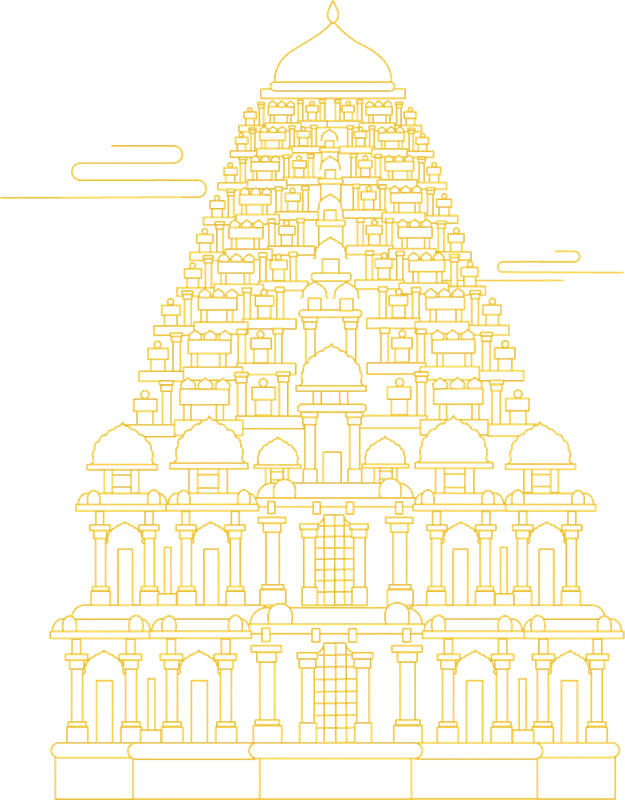
The Nayak rulers were devoted patrons of temple architecture and religious institutions. Their contributions included the renovation of ancient shrines, the construction of additional mandapas, the enhancement of temple enclosures and the provision of endowments for religious festivals and daily worship. Nayak-period architectural features are particularly associated with imposing gopurams (temple gateway towers), expansive pillared corridors and intricately decorated mandapas (ceremonial halls). Across the Kaveri delta, the Nayaks supported several important Shaiva and Vaishnava centres, helping preserve and enrich the region’s sacred architectural heritage. The magnificent Brihadisvara Temple, originally constructed during the Chola period, also received attention during the Nayak era through later additions and improvements. Rather than replacing the architectural achievements of earlier dynasties, the Nayaks contributed another distinctive layer to Thanjavur’s extraordinary temple heritage.

Thanjavur – A Cradle of Classical Music and Dance
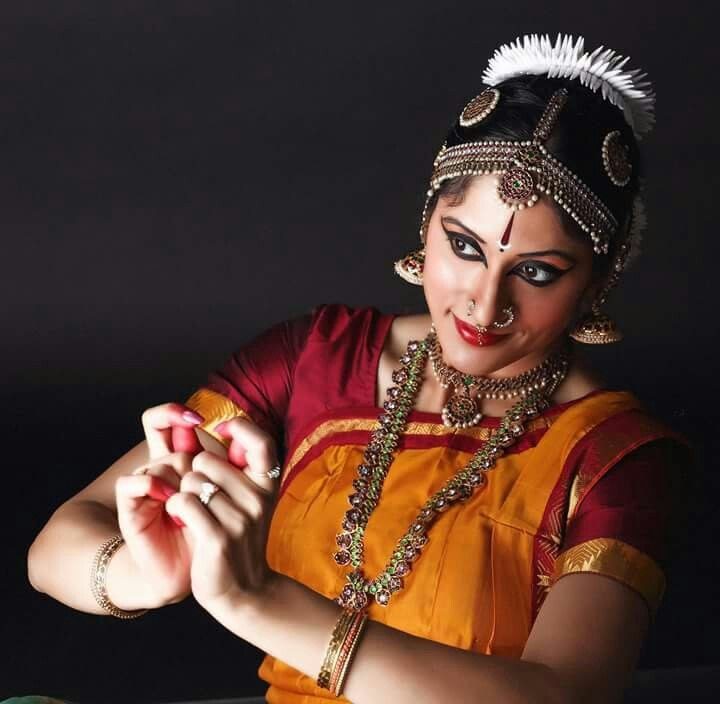
One of the most celebrated contributions of the Thanjavur Nayaks was their extraordinary encouragement of music and performing arts. Music and dance occupied an important place in royal ceremonies, temple worship and cultural celebrations. The royal court attracted accomplished musicians, dancers and composers, while the rulers themselves participated in literary and musical pursuits. Telugu dance-drama traditions flourished during this period, contributing to the wider artistic environment from which later South Indian classical performance traditions developed.
The region also became an important centre for the refinement of traditional musical instruments, including the veena and mridangam. This vibrant cultural atmosphere helped establish Thanjavur as one of the most influential centres of South Indian classical arts. The musical and dance traditions nurtured during the Nayak period continued to evolve under later rulers, contributing to the celebrated Carnatic music and Bharatanatyam heritage associated with Thanjavur.
A Flourishing Centre of Telugu, Sanskrit and Tamil Literature
The Thanjavur Nayak court emerged as a distinguished centre of multilingual scholarship, encouraging literary expression in Telugu, Sanskrit and Tamil. The royal household itself included accomplished writers and patrons of literature. Poets, grammarians, musicians and scholars were welcomed into the court, where intellectual pursuits received considerable encouragement. One notable literary figure associated with this period was Ramabhadramba, a celebrated Sanskrit poetess known for her historical composition on Raghunatha Nayak. The court also supported the creation of Telugu poetry, prose and dance dramas, making Thanjavur an important contributor to the literary history of southern India. The recognition extended to women writers and intellectuals further illustrates the rich literary environment fostered by the Nayak court.
The Thanjavur School of Painting – An Artistic Legacy in Gold
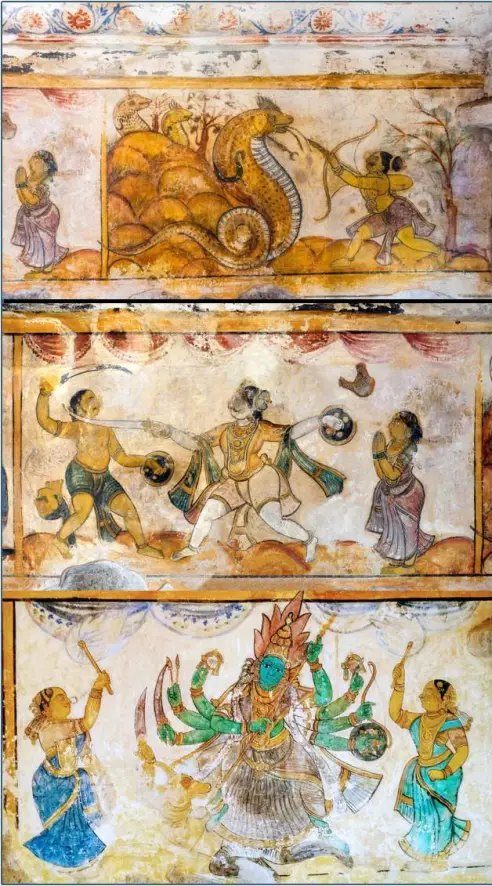
The Thanjavur School of Painting is one of South India’s most treasured artistic traditions, renowned for its luminous gold embellishments, vibrant colours and distinctive raised decorative work.
Developing during the Nayak and subsequent Maratha periods, this devotional art form draws inspiration from the religious and artistic traditions of the Kaveri delta. Traditional Thanjavur paintings commonly portray Hindu deities, divine figures and saints, distinguished by their expressive faces, graceful compositions, elaborate ornaments and radiant gold-leaf detailing. Artists traditionally created these works on wooden panels, using carefully prepared surfaces and raised gesso ornamentation to produce their characteristic three-dimensional appearance. Originally cherished for temple and household worship, Thanjavur paintings have evolved into internationally recognised examples of Indian traditional craftsmanship. Even today, this remarkable art form continues to flourish, preserving the artistic spirit of the region for future generations.
Saraswathi Mahal Library – A Treasure House of Knowledge
The Saraswathi Mahal Library is one of the most remarkable intellectual treasures of Thanjavur and an enduring symbol of the region’s royal commitment to knowledge and scholarship. Its origins are associated with the royal manuscript collections developed during the Nayak period. The subsequent Maratha rulers expanded the collection considerably, particularly under the scholarly patronage of Serfoji II. The library preserves an extraordinary collection of palm-leaf and paper manuscripts in several languages, including Sanskrit, Tamil, Telugu and Marathi. Its manuscripts cover a wide range of subjects, including literature, religion, philosophy, medicine, music and traditional sciences.
Today, the library is recognised as an important centre for the preservation and study of South Indian intellectual heritage. For visitors interested in history, ancient manuscripts and the evolution of knowledge in India, Saraswathi Mahal offers a fascinating window into centuries of scholarship.
The Nayaks and Their Relations with European Traders
During the Nayak period, the Coromandel Coast was an important centre of maritime commerce, attracting European trading companies seeking access to the prosperous markets of South India. The Thanjavur Nayak rulers engaged with European powers, including the Portuguese, Dutch and Danish, through commercial arrangements and coastal settlements. One of the most notable examples was the establishment of the Danish trading settlement at Tranquebar (Tharangambadi), reflecting the growing commercial connections between the Tamil coast and Europe. These relationships introduced new commercial opportunities and encouraged the exchange of goods and ideas. Nevertheless, the Nayaks retained their political authority over their kingdom during this period. Their dealings with European traders demonstrate Thanjavur’s place within the wider maritime and commercial networks of the early modern world.
How Did the Thanjavur Nayak Dynasty Come to an End?
The decline of the Thanjavur Nayak dynasty was shaped by political rivalries, regional conflicts and changing power structures across southern India. Tensions with neighbouring Nayak kingdoms, particularly Madurai, weakened Thanjavur’s political position. As regional powers
competed for influence, the kingdom became increasingly vulnerable to external intervention. During the seventeenth century, the Marathas, led by Venkaji (also known as Ekoji), a half-brother of Shivaji, took control of Thanjavur and established a new ruling dynasty. This marked the end of Nayak political rule and the beginning of the Maratha period in the city. However, the transition did not erase the cultural achievements of the Nayaks. Their literary traditions, artistic institutions, temple patronage and scholarly collections continued to develop under their successors.
Society and Everyday Life During the Nayak Period
The society of the Thanjavur Nayak kingdom was shaped by agriculture, religious institutions, commerce and artistic patronage. The fertile Kaveri delta supported a prosperous agrarian economy, with farming communities, merchants, weavers, artisans and temple workers contributing to the region’s social and economic life. Villages and towns developed around irrigation networks, agricultural lands and important temples. Religious institutions served not only as places of worship but also as centres of employment, cultural activity and community life. Telugu-speaking Nayak families lived alongside Tamil-speaking communities, creating a culturally diverse environment in which languages, artistic traditions and customs interacted. Royal endowments supported temples, musicians, dancers, scholars and craftsmen, strengthening the relationship between the kingdom’s prosperity and its cultural institutions. This combination of agricultural wealth, religious life and artistic activity helped shape the distinctive cultural identity of Thanjavur.
How Historians Reconstruct the Nayak Era
Our understanding of the Thanjavur Nayak dynasty comes from a variety of historical sources, including inscriptions, temple records, literary works, European trading documents and surviving royal buildings. Court poetry in Telugu and Sanskrit provides valuable insights into the rulers, their achievements and the intellectual environment of the period. Temple inscriptions and records help historians understand royal donations, religious endowments and architectural developments, while European company documents offer additional perspectives on trade and diplomatic relations. The surviving palace complex and manuscript collections provide further evidence of the dynasty’s cultural and administrative life. As historical sources sometimes differ in their accounts, scholars continue to examine and compare the evidence. Certain early reign dates and events therefore remain subjects of historical debate.
Thanjavur Nayak Heritage Today – A Legacy That Lives On
The legacy of the Thanjavur Nayaks remains deeply woven into the cultural identity of modern Thanjavur. Their influence can still be experienced through the historic palace complex, the temples of the Kaveri delta, the treasured collections of Saraswathi Mahal Library and the region’s enduring traditions of classical music, dance and painting. Thanjavur is particularly fascinating because its heritage is not confined to a single historical period. The city brings together the architectural brilliance of the Cholas, the artistic refinement of the Nayaks and the scholarly contributions of the Marathas.
Visitors can explore these remarkable historical layers through ancient monuments, royal buildings, traditional art workshops, musical performances and living cultural traditions. To discover Thanjavur is to experience centuries of South Indian history, where royal grandeur, spiritual devotion and artistic excellence come together in one extraordinary destination.
Lakshmi Hotel · Thanjavur
A Legacy That Lives On
Walk the Nayak palace, the Saraswathi Mahal and the music of Thanjavur.